The main pantry types
Most pantries fall into a few families. Walk-in pantries are small rooms. Reach-in pantries are closets with a single door. Pull-out pantries are tall cabinets on slides, and cabinet pantries are tall boxes that match your kitchen. Butler pantries sit between the kitchen and dining room and add serving space.
Each can be built in many styles and sizes, and many homes combine more than one.
Do not feel you must pick a style by name. Describe how you want the room to work, and a good designer will translate that into the right type, size and layout for your home.
Walk-in pantries
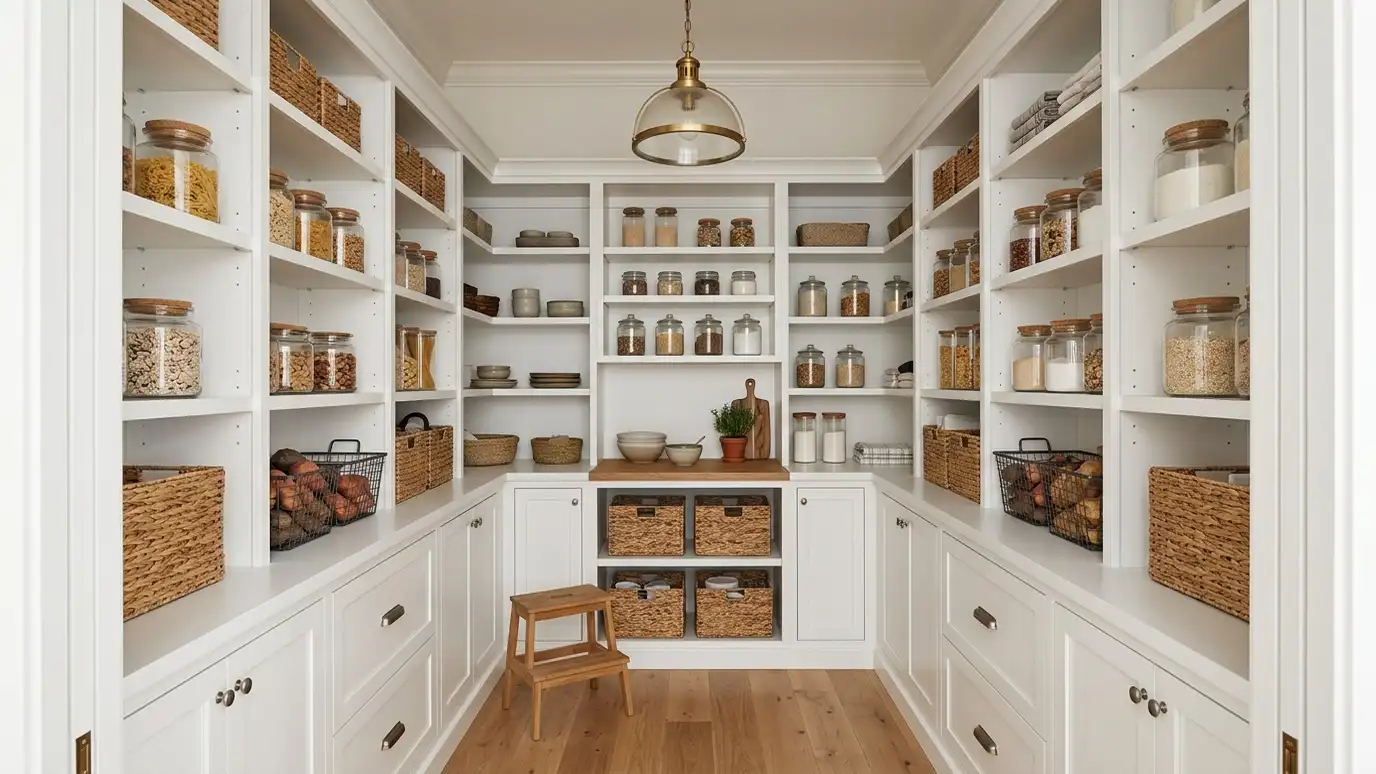
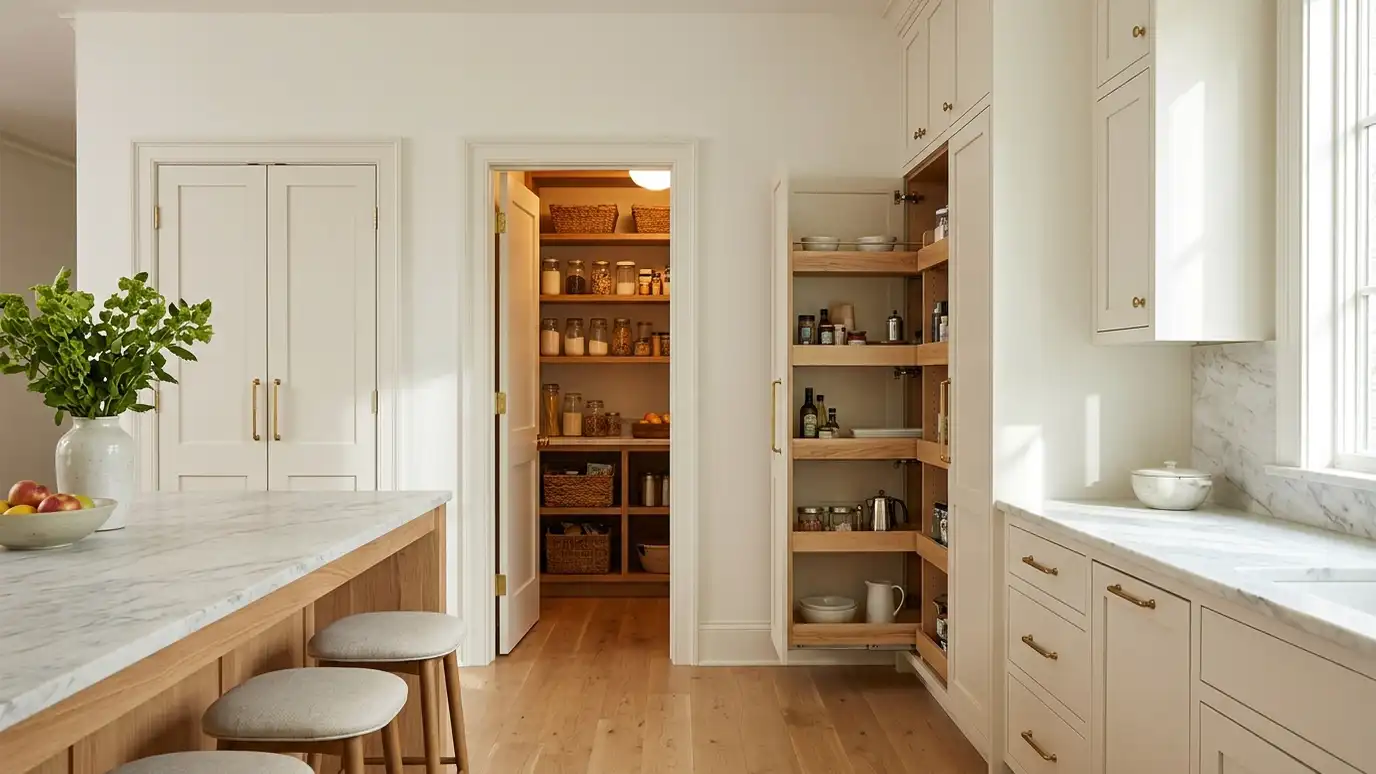
A walk-in gives the most storage and shows everything at a glance. It suits families who shop in bulk, cook often and want a work counter. It needs real floor space, usually at least four by five feet.
If you have a spare corner or a closet that can be expanded, a walk-in is often worth the effort.
A walk-in works best when it has a clear purpose. If you want a work counter, a coffee station or a place for bulk goods, plan those from the start, because they change how deep the room must be.
Reach-in closet pantries
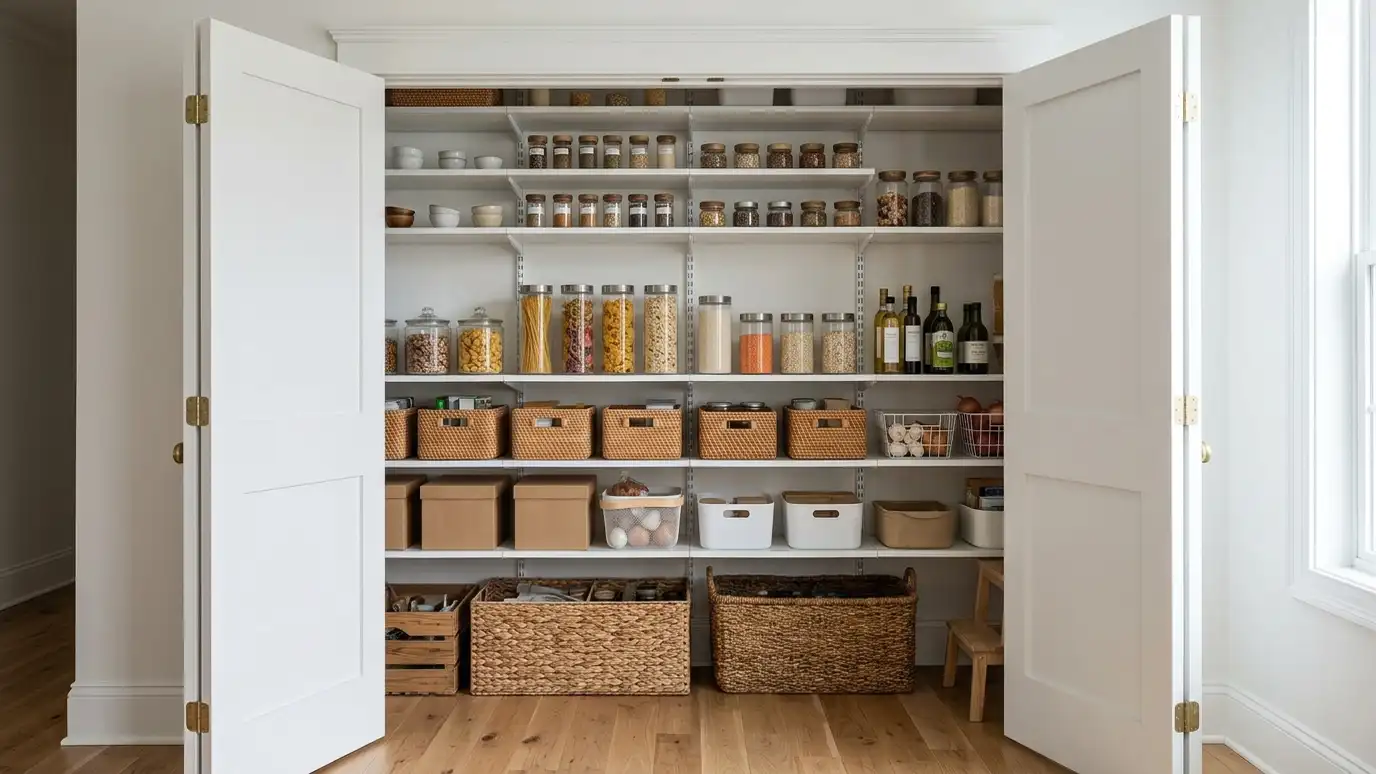
A reach-in is the practical hero. It fits a shallow closet, costs less and, with adjustable shelves and door racks, can hold a surprising amount. It needs good planning so items are not lost in the back.
This is the most common choice in older Nashville homes where a closet near the kitchen can be repurposed.
In a closet pantry, depth is the main limit, so careful planning of what goes where is everything. Place the items you reach for daily at the front and eye level, and keep bulk goods low.
Pull-out and cabinet pantries
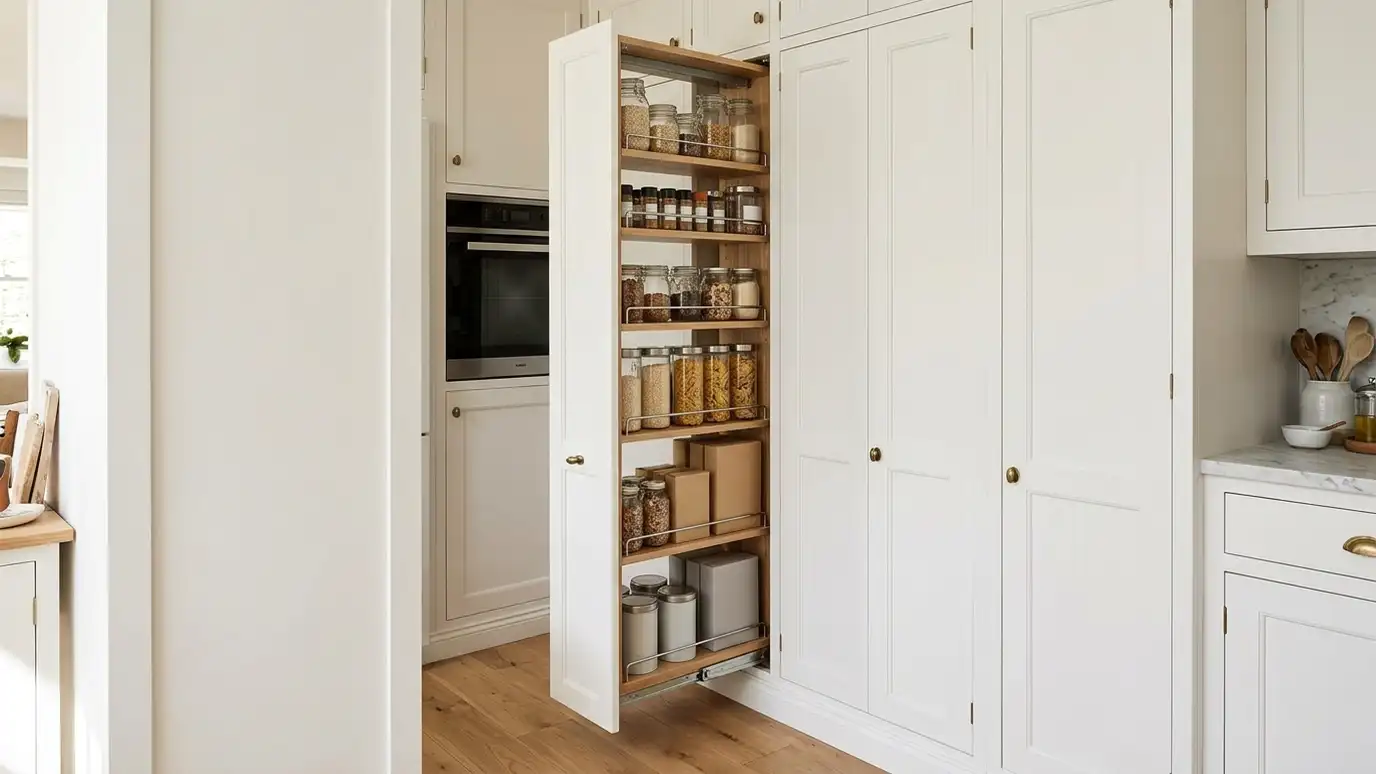
Pull-out pantries bring everything to you and fit in narrow gaps. Cabinet pantries match the rest of the kitchen and hide clutter behind doors. Both suit remodels where wall space is limited and appearance matters.
They are a strong choice when you want storage without changing walls.
Pull-outs shine in narrow spaces beside appliances or at the end of a cabinet run. They also make an excellent upgrade inside an existing cabinet when you want better access without changing the kitchen layout.
Butler and scullery pantries
A butler pantry adds serving space between the kitchen and dining room, with counters, cabinetry and often a sink or beverage fridge. A scullery is a working room for messy prep and small appliances.
They suit people who entertain and want the main kitchen to stay clean.
If you host often, the extra surface of a butler pantry pays off quickly. Having a place to stage drinks, plates and platters keeps guests out of the working kitchen and makes the whole evening calmer.
Matching a type to your life
Think about how many people you cook for, how often you shop, how much you entertain and how much space you can spare. A couple who shops weekly may be happy with a pull-out. A family with a warehouse membership may want a walk-in.
Our pantry quiz and capacity tool help you estimate what you need before you commit.
It can help to keep a simple log for two weeks, noting what you reach for and how often. The pattern that emerges is a surprisingly accurate guide to the size and type of pantry that will suit you.
Mixing and phasing
You do not have to choose one. Many homes pair a cabinet pantry in the kitchen with a garage overflow area, or a reach-in closet with a coffee bar. You can also build in phases, starting with shelves and adding drawers or a counter later.
A good plan leaves room to grow.
Think about the next five years as well as today. Families grow, hobbies change and shopping habits shift, so a design with adjustable parts and a little spare capacity will stay useful for much longer.
Match the pantry type to your space and habits, and be open to combining types to get the best result.