Look for hidden inches
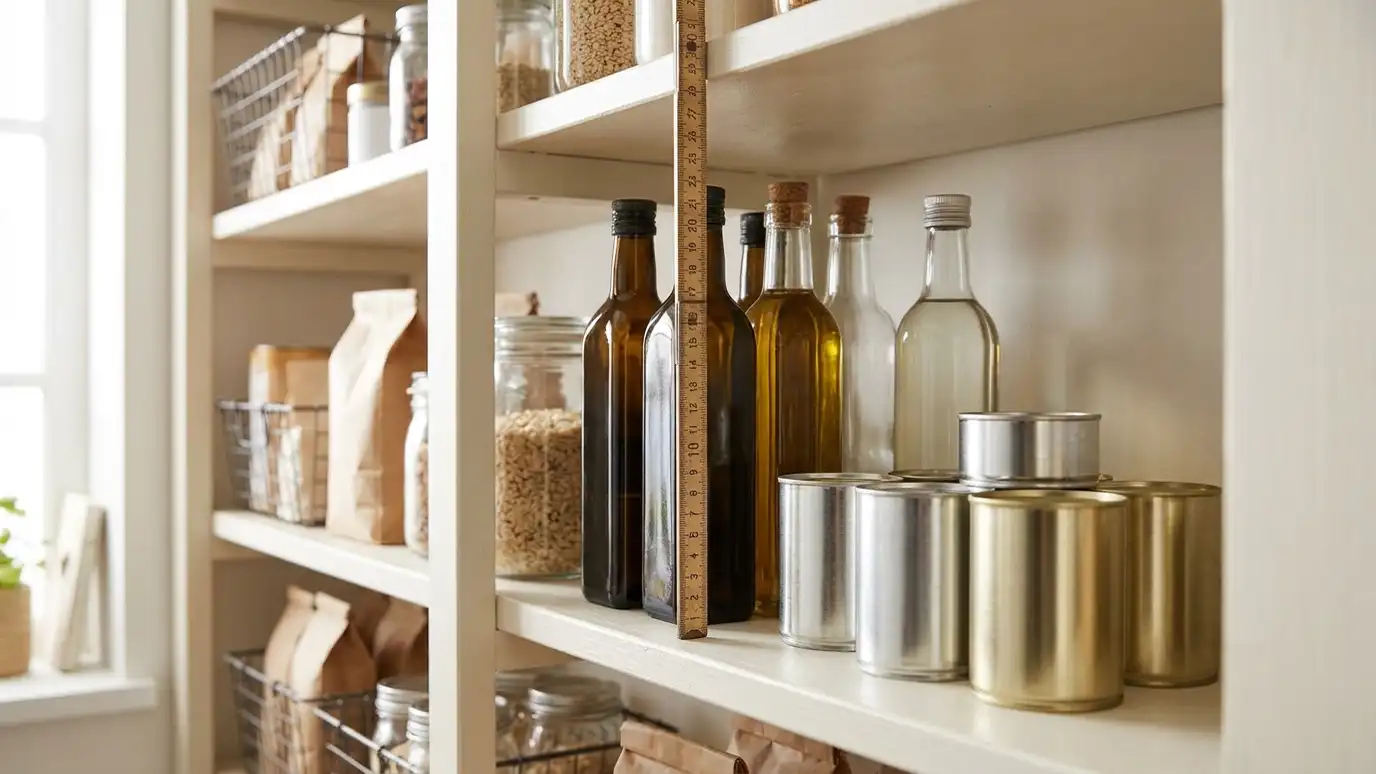
Small kitchens hide space. A gap beside the refrigerator, a blank wall, the space above the door and the end of a cabinet run can all hold storage. Measure everything, because even six inches matters.
A free visit often reveals spots you had overlooked.
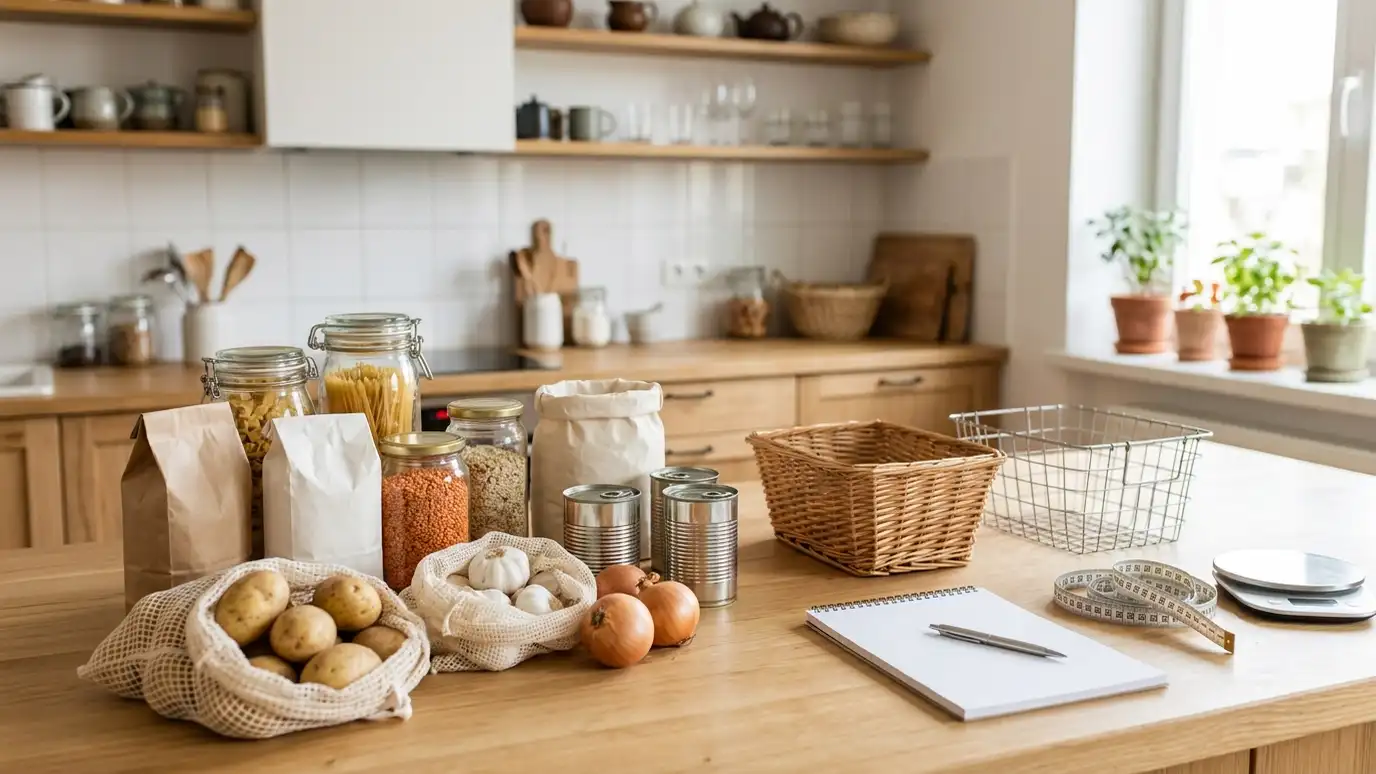
Carry a tape measure through your kitchen with a notepad. You may be surprised how many dead zones appear, from the gap beside the fridge to the blank wall by the back door.
Slim pull-out cabinets
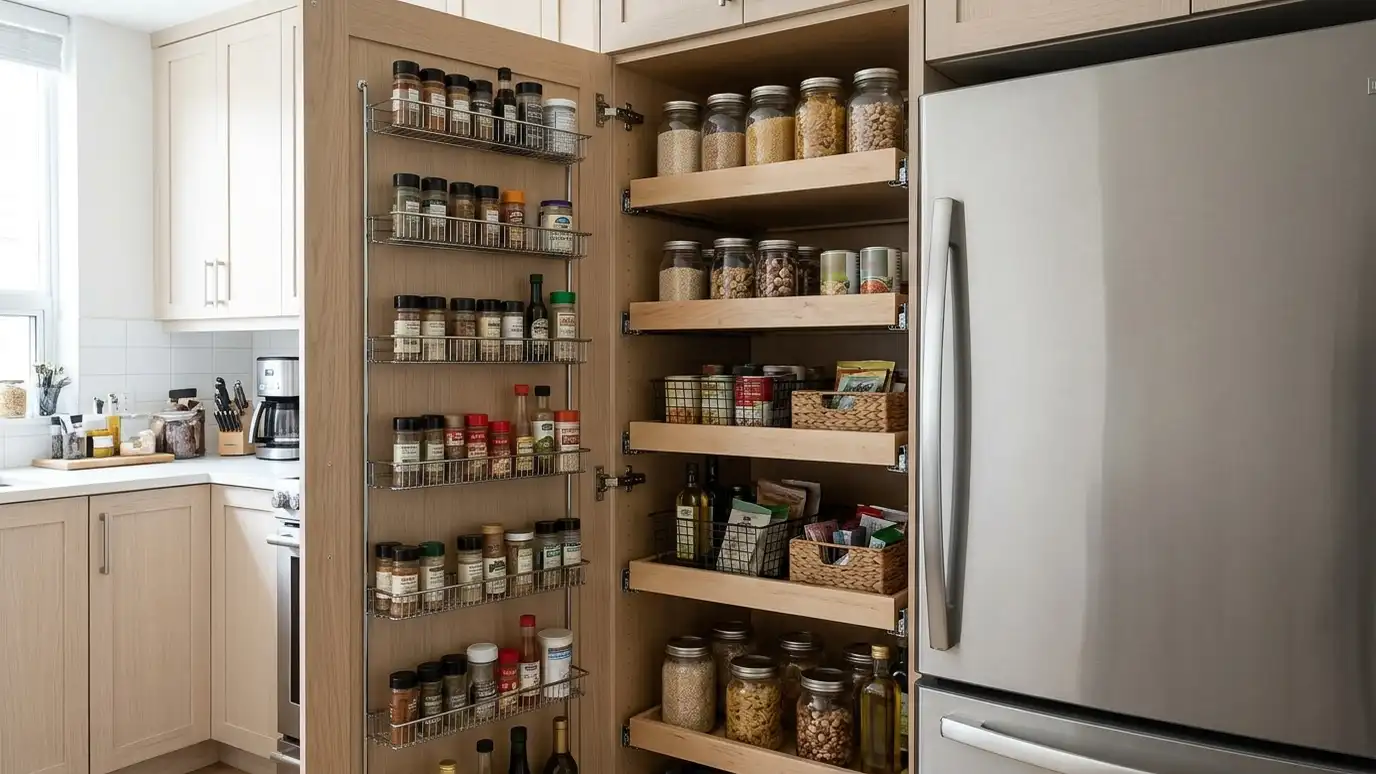
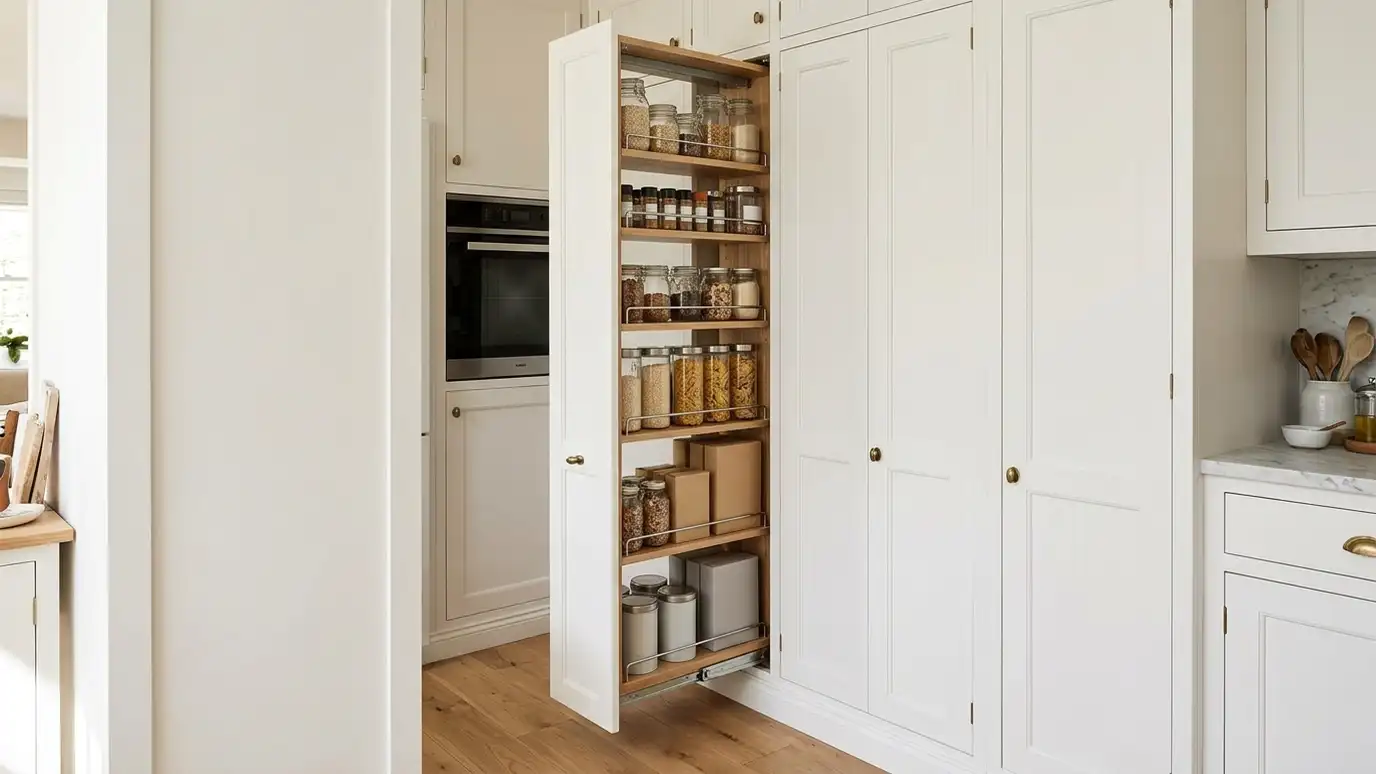
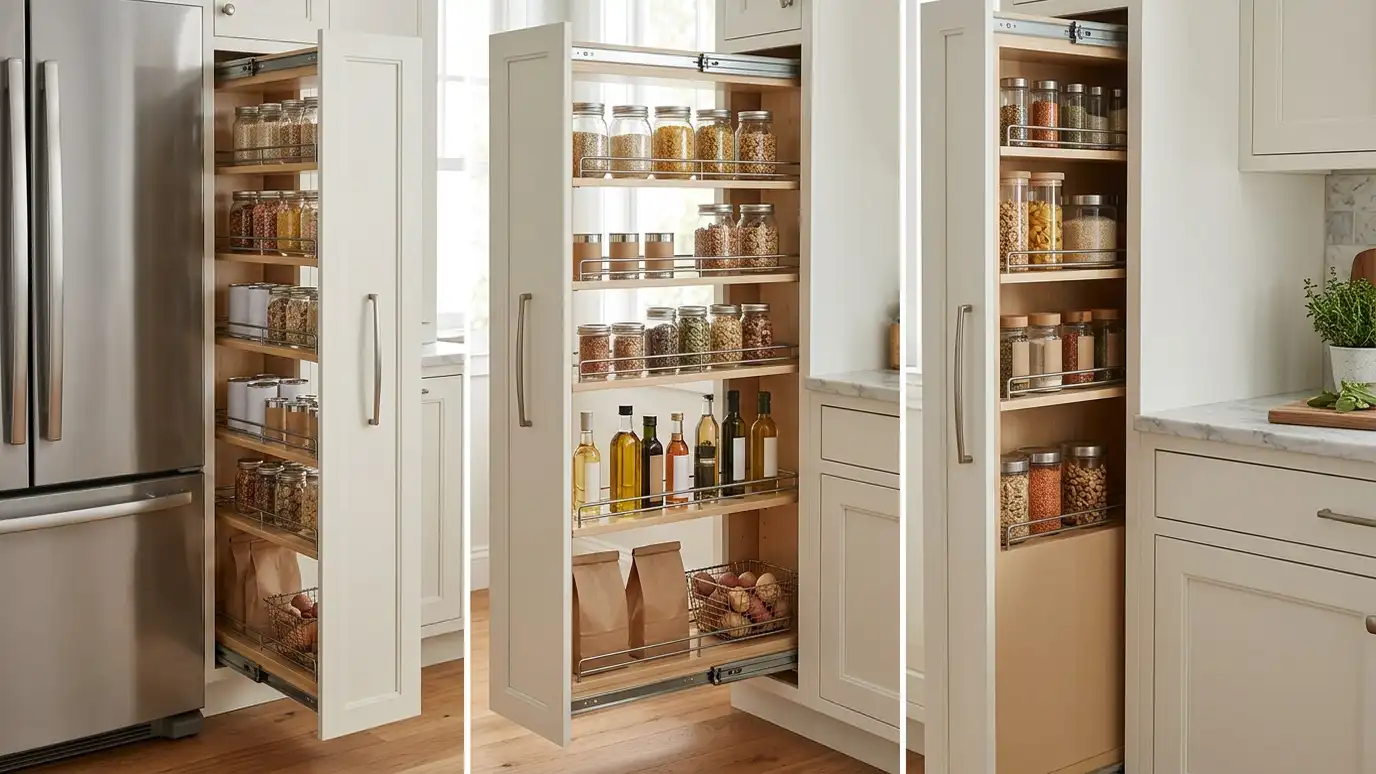
A pull-out pantry as narrow as six inches can hold a surprising amount. It rolls out so you can see and reach every item. It fits where nothing else can.
It is one of the best ideas for small kitchens.
Ask for samples of the hardware and slides before ordering a narrow pull-out. Smooth, full-extension slides make the difference between a unit you love and one you stop using after a month.
Use the doors
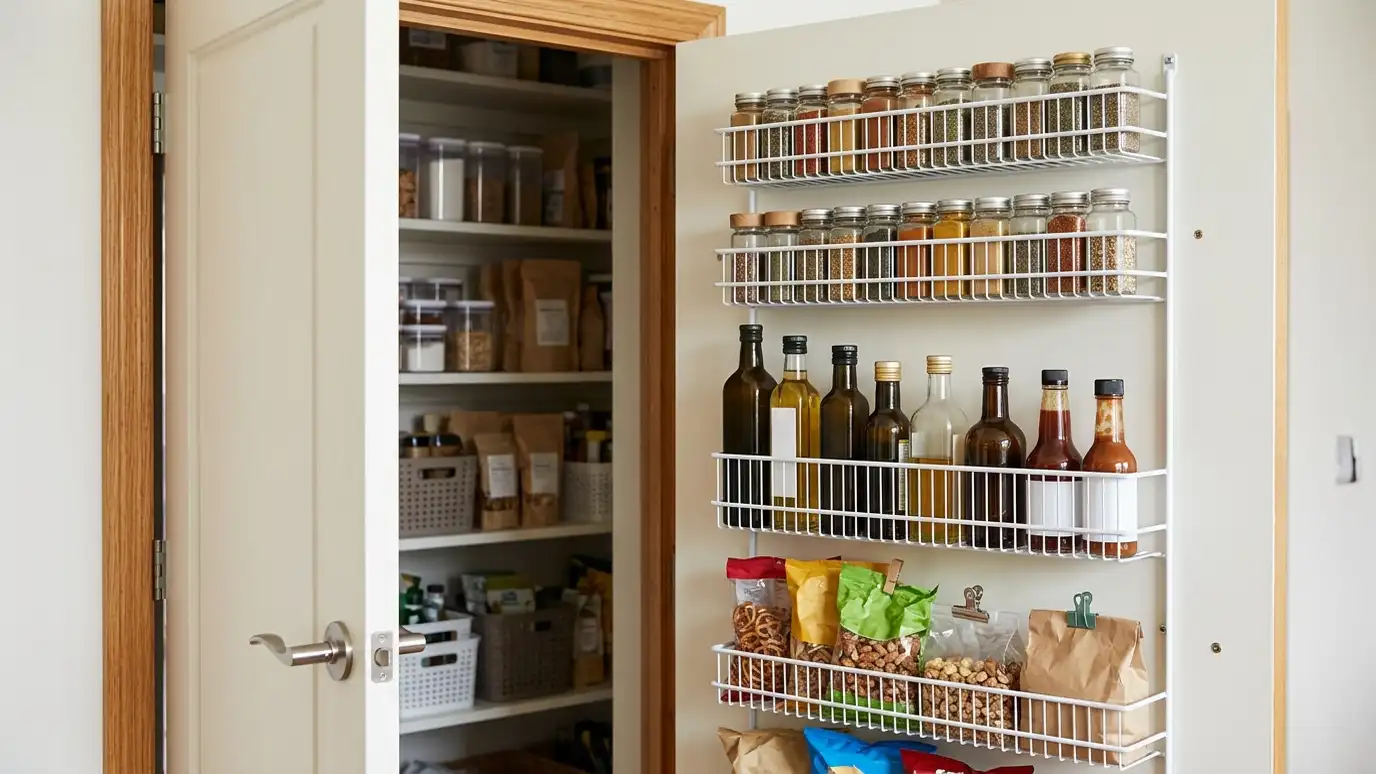
The back of a door can hold spices, foil, bags and small cans. A door rack uses space that is otherwise wasted. It also keeps frequently used items within reach.
Check clearance so the rack does not hit the shelves.
Lightweight, clear racks on the back of a door can hold more than you expect. Fill them with small, frequently used items so the shelves inside stay free for bulk and heavy goods.
Go vertical
Tall shelves and wall-mounted racks use height. A small step stool or lowering rack makes upper shelves reachable. Keep rarely used items high and daily items at eye level.
Vertical storage frees counters and floor.
When going vertical, always plan how you will reach the top. A small stool stored in the pantry or a lowering rack makes high shelves useful instead of aspirational.
Keep it bright and open
Light finishes, glass fronts and good lighting make a small pantry feel larger. Avoid clutter on open shelves, and use clear containers to keep things visible.
A tidy small pantry feels bigger than a messy large one.
A pop of light and a single bright color inside a tiny pantry can make it feel like a deliberate design feature. Small spaces reward bold, simple choices more than careful fussiness.
Use nearby spaces
A hallway closet, a space under the stairs or a corner of the garage can serve as overflow. Keep daily items in the kitchen and bulk items nearby.
A rolling cart can add flexible storage that moves when you need it.
A narrow rolling cart is a flexible overflow solution. It tucks beside the refrigerator or in a closet, then rolls out for loading and unloading, and it can move to the next home if you do.
Choose less, but better
In a small pantry, fewer, better-chosen items work best. Decant staples into compact containers and avoid duplicates. Shop for what you need, not just what is on sale.
A simple system you can maintain beats a large one you cannot.
Try the one-in, one-out rule for packaged goods. When a new item arrives, finish or remove an old one, and the pantry stays at a manageable size without any big cleanups.
Hunt for hidden inches, go vertical and use pull-outs and doors to make every inch work.