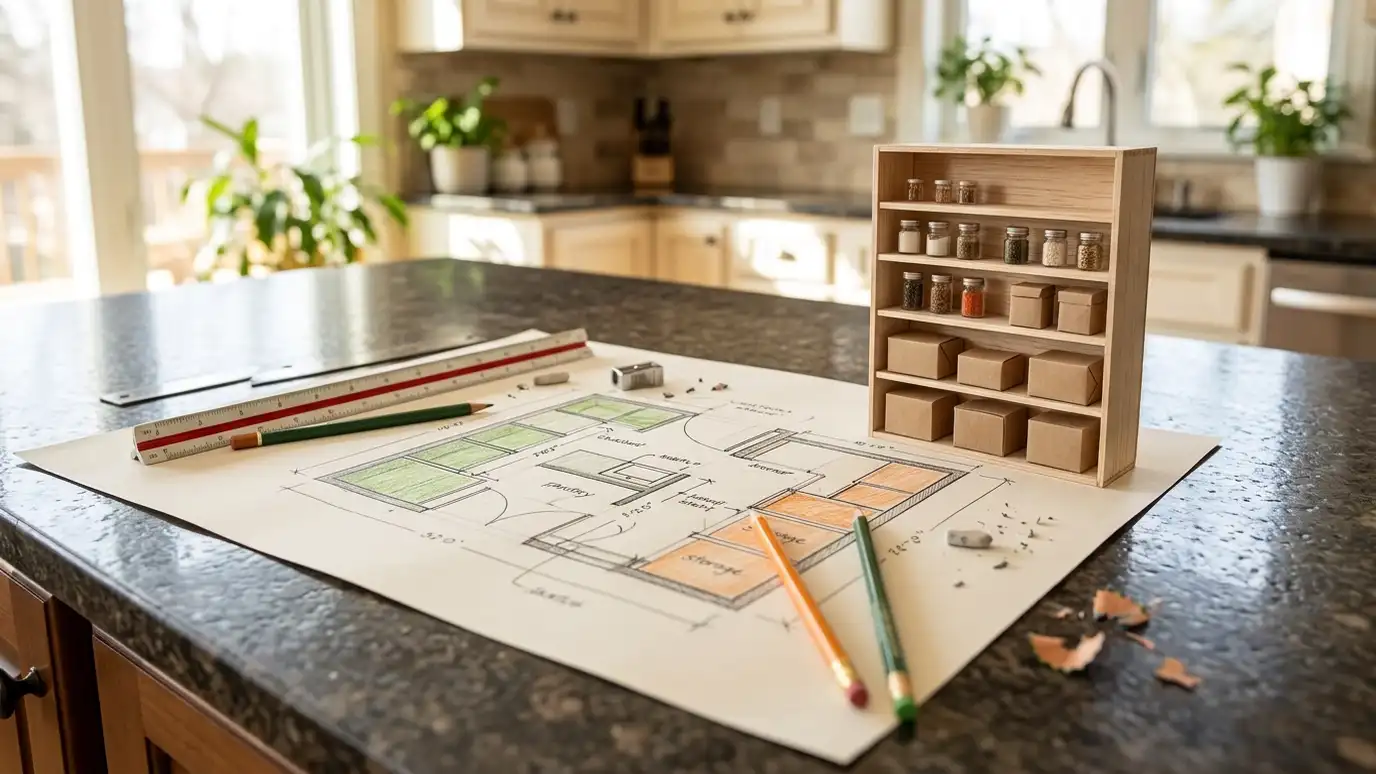

Start with what you want
Before you call anyone, write down what you want the pantry to do. How many people use it, what you store, whether you want drawers, a counter, a door style or lighting. A short list makes every conversation more useful and every estimate easier to compare.
It also helps to collect a few photos of pantries you like. Pictures communicate style faster than words.
Many owners find it helpful to rank their priorities, for example schedule, style, budget and communication. Knowing which matters most helps you weigh estimates fairly when they are not identical.
Look at real work
Ask to see completed pantries, in photos or in person, and look at the details. Are the shelves level? Are the doors aligned? Are the gaps even and the finishes clean? Good work is easy to spot when you know where to look.
Ask what the photos show: the scope, the materials and how long ago the work was done. Beware of images that seem generic or unclear.
Ask for photos taken from several angles, including the inside of the shelves and the door edges. A company proud of its work is usually happy to show detail rather than only a flattering wide shot.
Ask about the process
A good company explains how it measures, designs, orders and installs. It tells you who will do the work, how long it will take and how it handles surprises. A company that cannot describe its process may not have one.
Ask who your contact will be and how you will receive updates. Communication is often the difference between a smooth project and a stressful one.
Notice how quickly and clearly someone answers your first call. Responsiveness at the start often predicts responsiveness during the project, and it matters a great deal when decisions need to be made on short notice.
Get a written, itemized estimate
The estimate should list the layout, materials, hardware, finishes, preparation and cleanup, with clear exclusions. Vague lines make comparisons impossible and leave room for disagreements.
Ask how changes are handled and documented. Written change notes protect both sides.
Keep every version of the estimate and any change notes in one folder. If a question comes up later about what was included, a clear written record protects you and the installer alike.
Check credentials and references
Ask what permits, registrations or trade credentials your area requires for the work involved, especially if electrical or structural changes are part of the plan. Ask for references and call them. Past clients are the best source of honest information.
Also check reviews with a critical eye. Look for patterns in what people mention, such as punctuality, communication and cleanliness.
Local references carry extra weight, because neighbors know the neighborhood, the homes and the weather. If you can visit a finished pantry nearby, you will learn more in ten minutes than from a stack of reviews.
Compare the whole picture
Do not compare price alone. Compare scope, materials, hardware, schedule, communication and the feel of the people. The lowest quote is not always the lowest cost once you add what it leaves out.
Choose a company that listens, explains and responds. You will be working with them in your home.
Think about the whole experience, not just the finished product. A tidy crew, a clear schedule and respectful communication make the weeks of the project far more pleasant than a slightly lower price ever could.
Questions to ask before you sign
Who will design and who will install? What materials and hardware are used? What is included in the price? What is the schedule? How are changes handled? What happens if something is damaged or needs adjustment later?
The answers tell you as much about the company as the number at the bottom of the page.
Write your questions down before meetings, and write the answers down as well. It sounds simple, but it prevents misunderstandings and gives you a clear basis for comparing companies once the meetings are done.
Know what you want, look at real work, get an itemized written estimate and choose the company that communicates clearly.