Plan for real routines
Families do not use pantries gently. Doors are opened with full hands, snacks are grabbed on the way out and bags are dropped on the floor. A family pantry has to be forgiving.
Start by watching how your household actually uses the space.
Spend a few mornings watching how everyone uses the kitchen. You will probably notice choke points, such as one spot where several people reach at the same time, that a better layout can solve.
A kid snack station
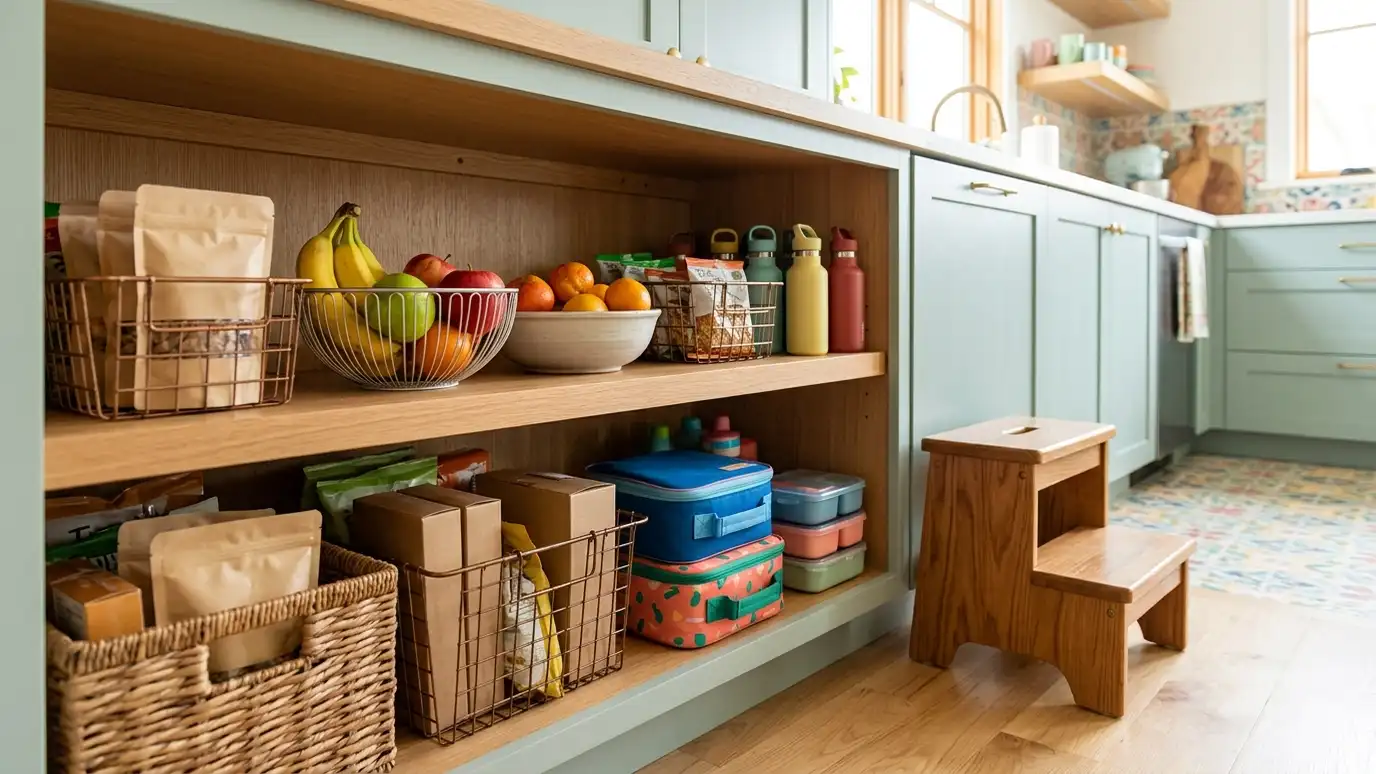
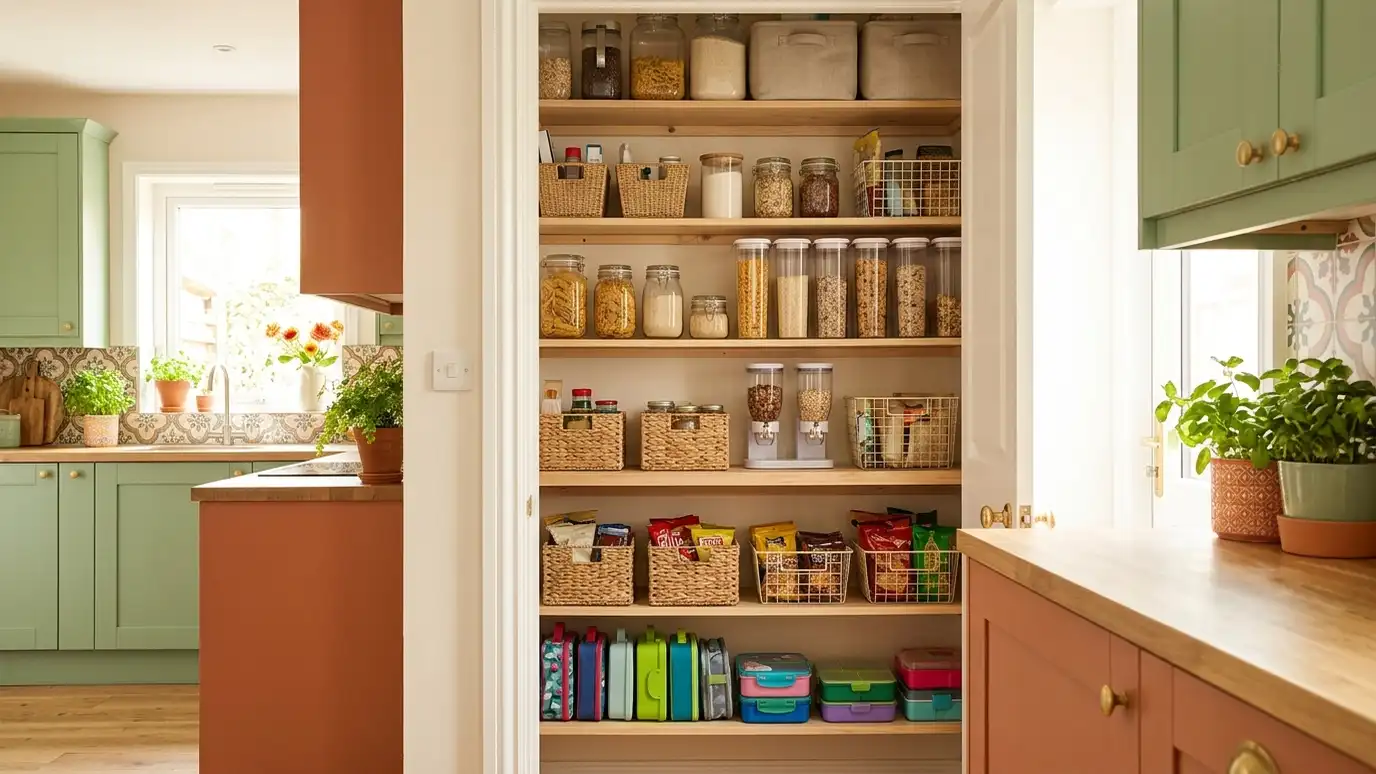
Put approved snacks on a low shelf or in a bin at child height. Use labels with pictures, so little ones can help themselves. Keep treats and breakables up high.
A station reduces interruptions and teaches independence.
Let children help choose the snacks for their station and the pictures for the labels. When they feel ownership, they keep the station tidy more willingly and take pride in helping.
Lunch packing zone
Group lunch boxes, bottles, ice packs and the daily makings together. A tray or bin on the counter makes packing quick. A weekly list taped inside the door helps.
Mornings go more smoothly when everything is in one place.
Keep a small whiteboard or chalkboard near the lunch zone for the weekly plan. Seeing the menu at a glance saves daily negotiations and makes packing a faster, calmer task.
Easy to reset
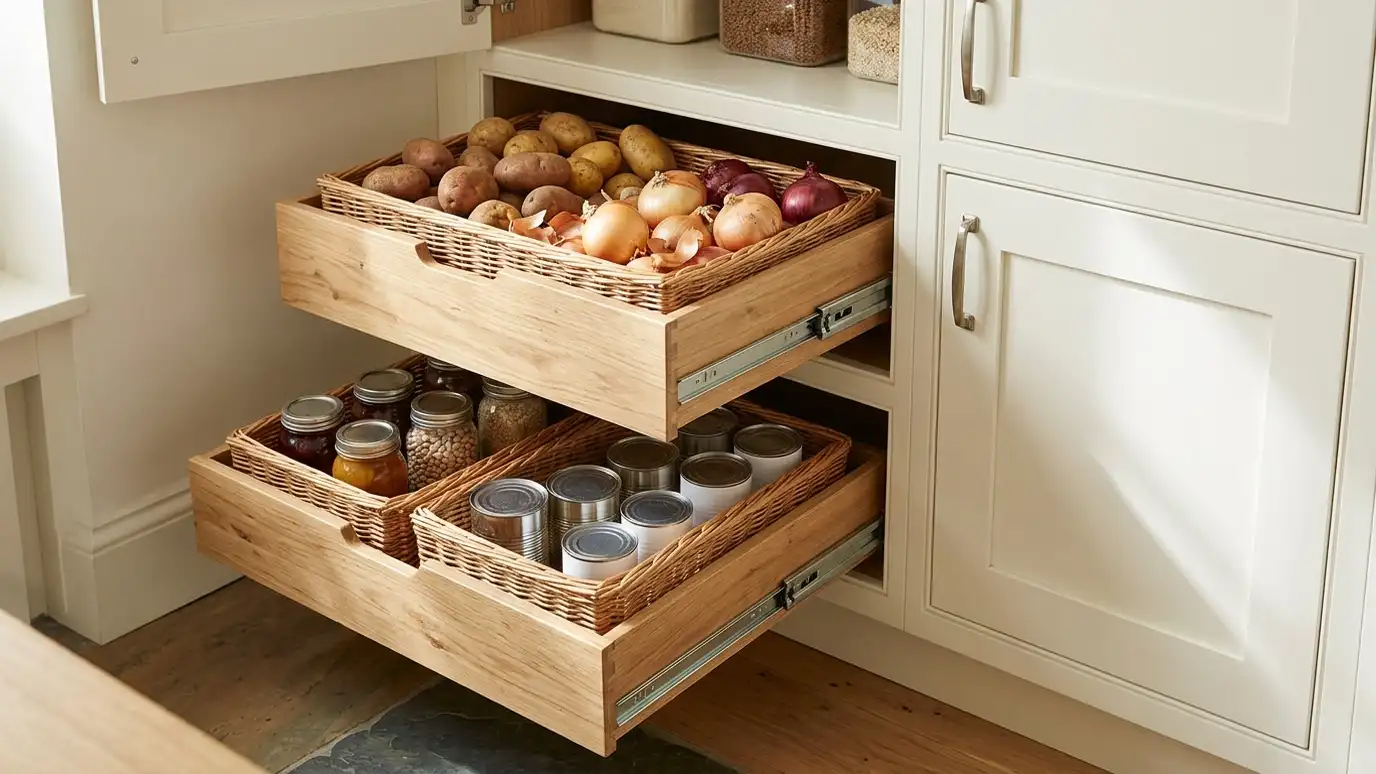
Use open bins, wide-mouth containers and simple labels. Avoid systems that need precise placing. If it takes more than a minute to put things away, it will not last.
Make cleanup a family habit.
Choose wide, shallow bins that children can pull out and put back with one hand. Tall bins with tight lids may look neat, but they tend to be left on the floor within a week.
Pets
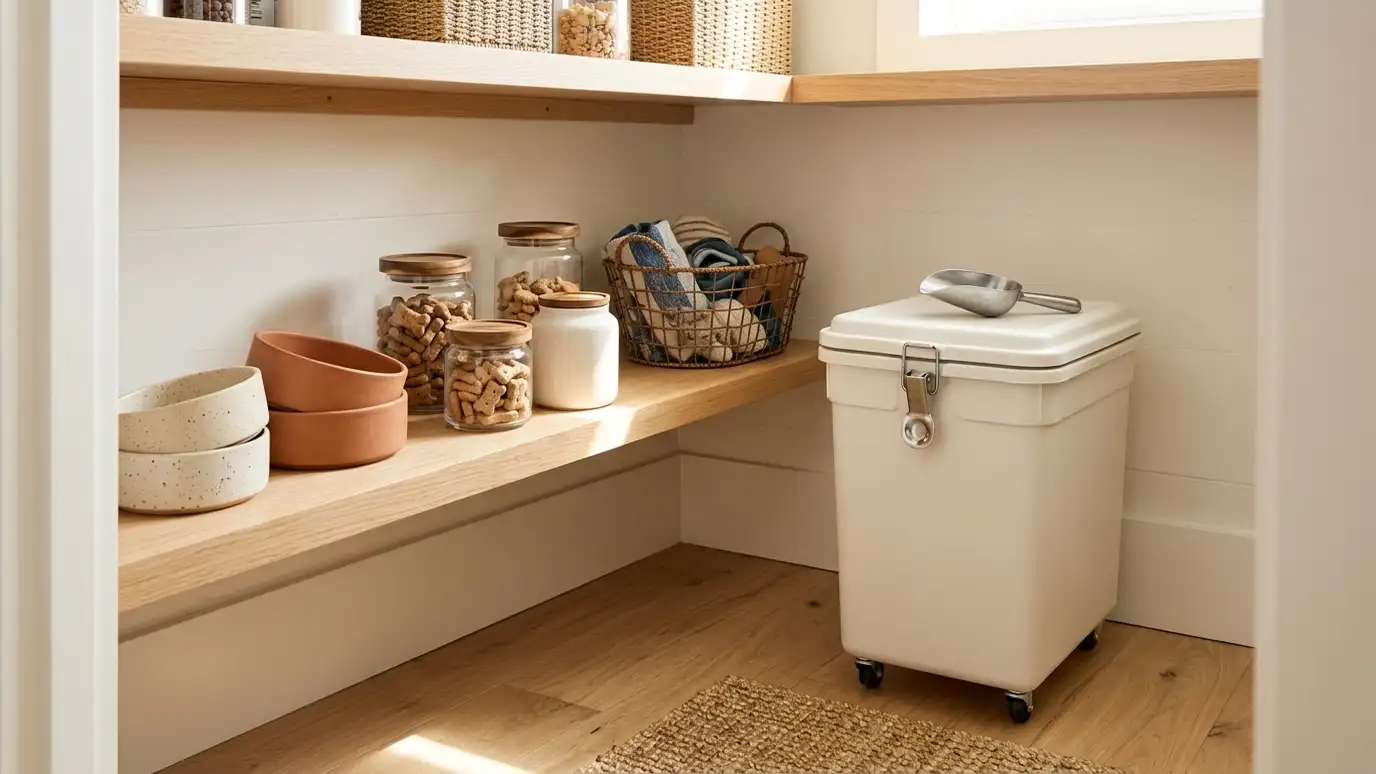
Keep pet food in a sealed bin and treats in a labeled drawer. A feeding nook with a mat keeps spills contained. Store medication and supplies out of reach.
Pets and children both benefit from clear boundaries.
Place the pet bowls on a washable mat, and store the scoop right in the food bin. Small touches like these make daily feeding quick and keep the kitchen floor much cleaner.
Safety
Store heavy items low and secure shelves to the wall. Keep chemicals, medicines and sharp tools in separate, locked storage. Use soft-close hardware to protect fingers.
Safety planning is part of good design.
Install door stops or soft-close dampers where small fingers might be at risk. These inexpensive additions protect children and also reduce noise in a busy kitchen.
Grow with your family
Needs change as children grow. Adjustable shelves and flexible bins adapt easily. Plan to review the setup every year or so.
A pantry that grows with you will serve your family for many years.
Revisit the setup at the start of each school year. A quick review of heights, snacks and routines keeps the pantry matched to the family, rather than to the family of three years ago.
Put kid snacks low, group the lunch makings, seal pet food and make it all easy enough to reset in a minute.