Start by emptying everything
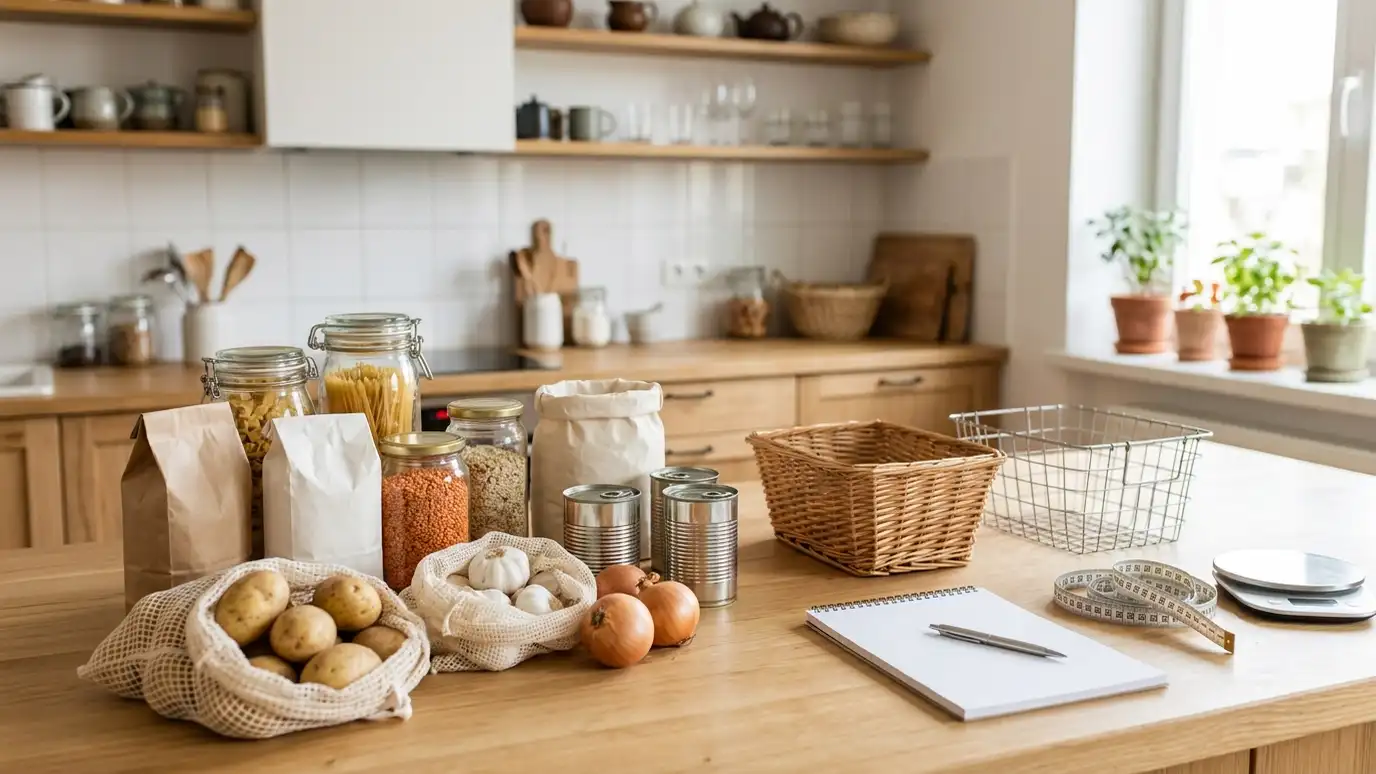
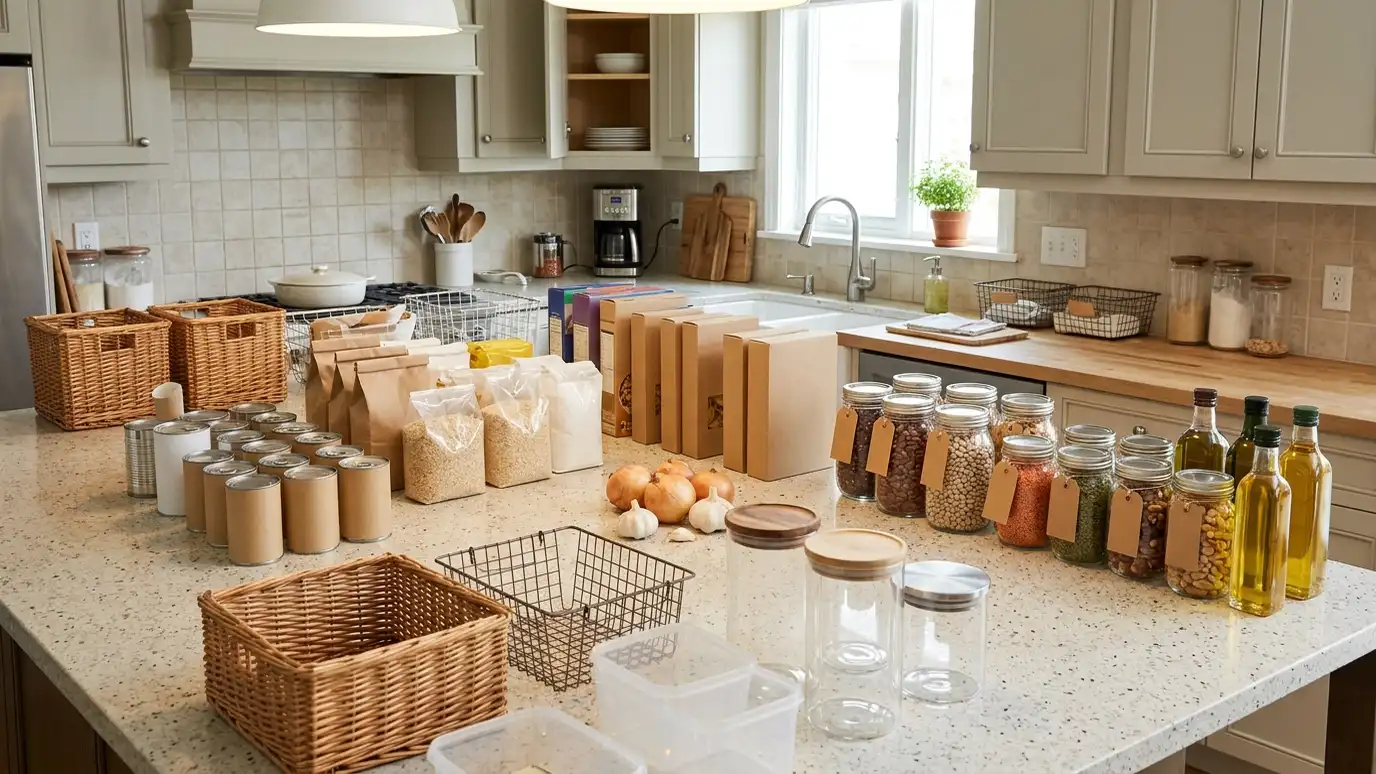
Take everything out and put it on a counter or table. It feels dramatic, but it is the only way to see what you own. Check dates, group duplicates and set aside items to donate or discard.
Wipe down the shelves while they are bare. A clean start motivates you to keep it that way.
Give yourself a couple of hours and play music while you work. A calm, unhurried sort makes better decisions than a rushed one, and it turns a chore into something closer to a reset for the whole kitchen.
Sort into categories
Group items by use: baking, breakfast, snacks, canned goods, pasta and grains, oils and sauces, drinks and appliances. Categories should match how you cook, not how the store arranges them.
Keep the number of categories manageable, since too many creates confusion.
It helps to say each category out loud as you sort. If a category is hard to name, the items probably do not belong together, and splitting them often makes the whole system clearer.
Create zones
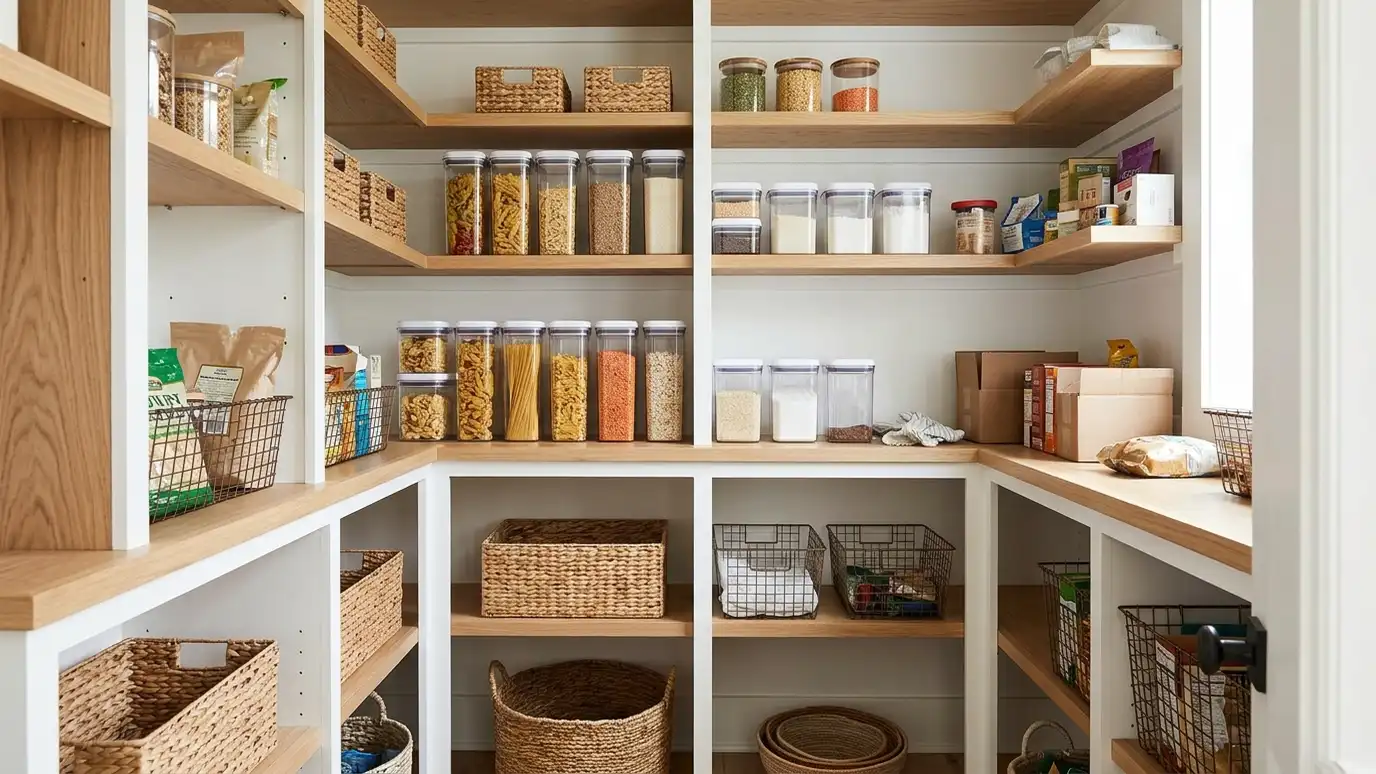
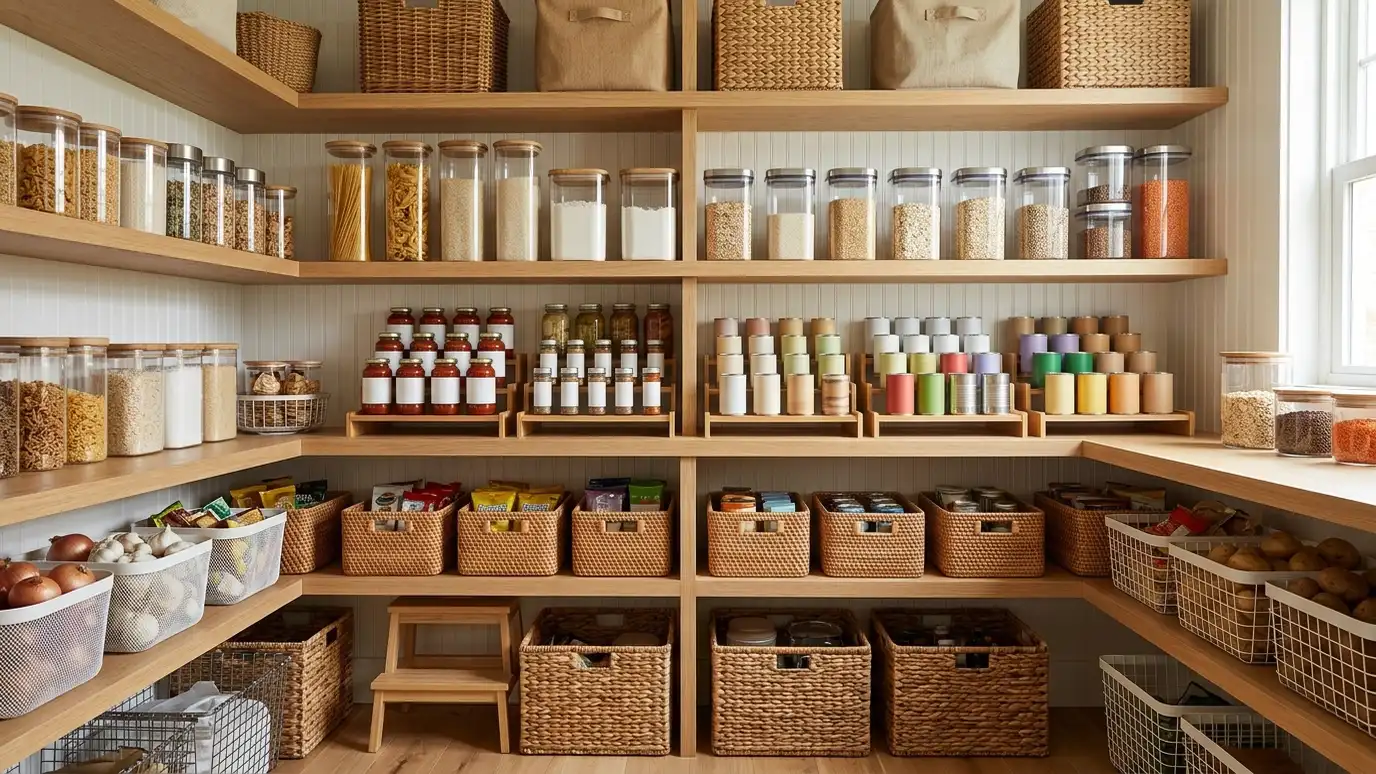
Assign each category to a zone. Daily items go at eye level, heavy bulk goes low and rarely used items go high. Keep related items near each other, so you can grab everything for a recipe in one motion.
Leave a little empty space in every zone for new purchases.
Test your zones for a week before buying anything permanent. Moving items around costs nothing, and you will quickly learn which zones feel natural and which need to move closer to the stove or the counter.
Choose the right containers
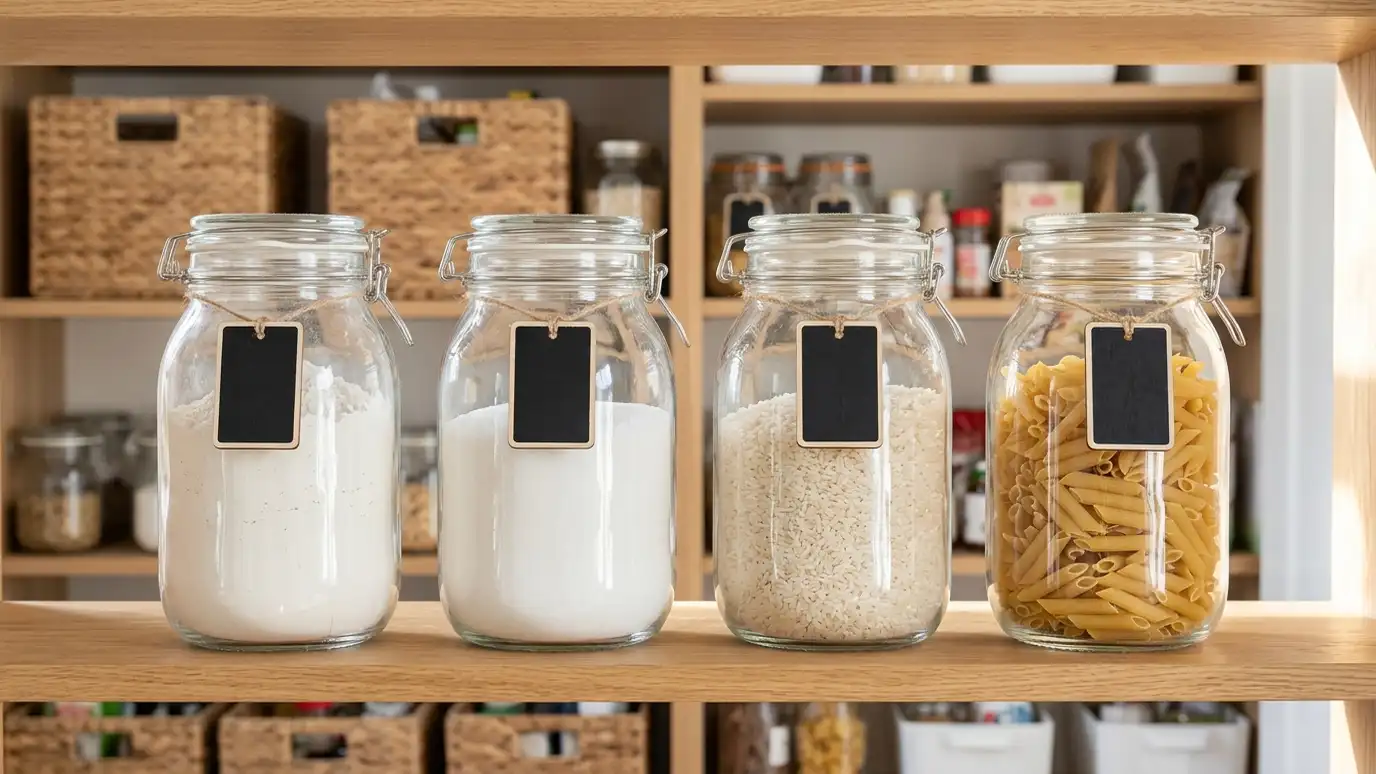
Clear, airtight containers keep dry goods fresh and show what is left. Baskets hold loose items, risers lift cans into rows and turntables reach into corners. Buy containers after you sort, so you know what size you need.
Fewer, well-chosen containers beat a large set that does not fit.
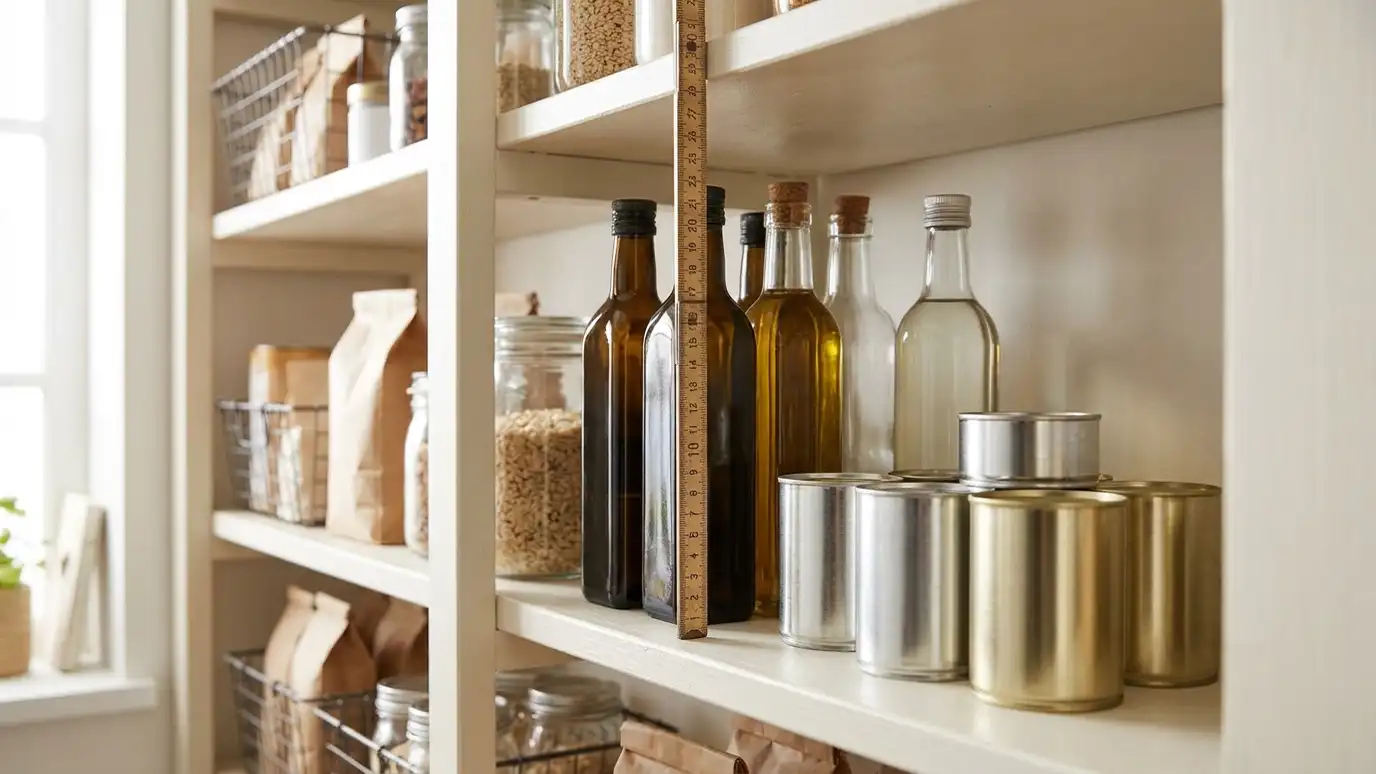
Measure shelves before shopping for containers, and bring the numbers with you. Containers that are a half inch too wide are a common and costly mistake, and they usually end up unused in a drawer.
Label everything
Labels remove guesswork for everyone in the house. Use clear text, and add a date for items that spoil. Labels on the shelf edge as well as on the container make returning items easy.
Consistency matters more than style.
Use a label maker or a simple marker, whichever you will actually use. The best system is the one that gets done, and a handwritten label that exists beats a beautiful one that never makes it onto the jar.
Put kids and guests in mind
Place kid-approved snacks low, and keep treats and breakables high. Make labels simple, so anyone can find and return items. A system that only one person understands will not last.
Walk through it with your household once so everyone knows the plan.
Involve everyone who uses the pantry in setting the labels and zones. People follow systems they helped build, and the pantry stays in order much longer when the whole household understands the plan.
Habits that keep it tidy
Wipe spills right away, check dates once a month and do a quick reset before big shopping trips. Rotate items so older ones move forward. A short, regular routine beats a long annual cleanup.
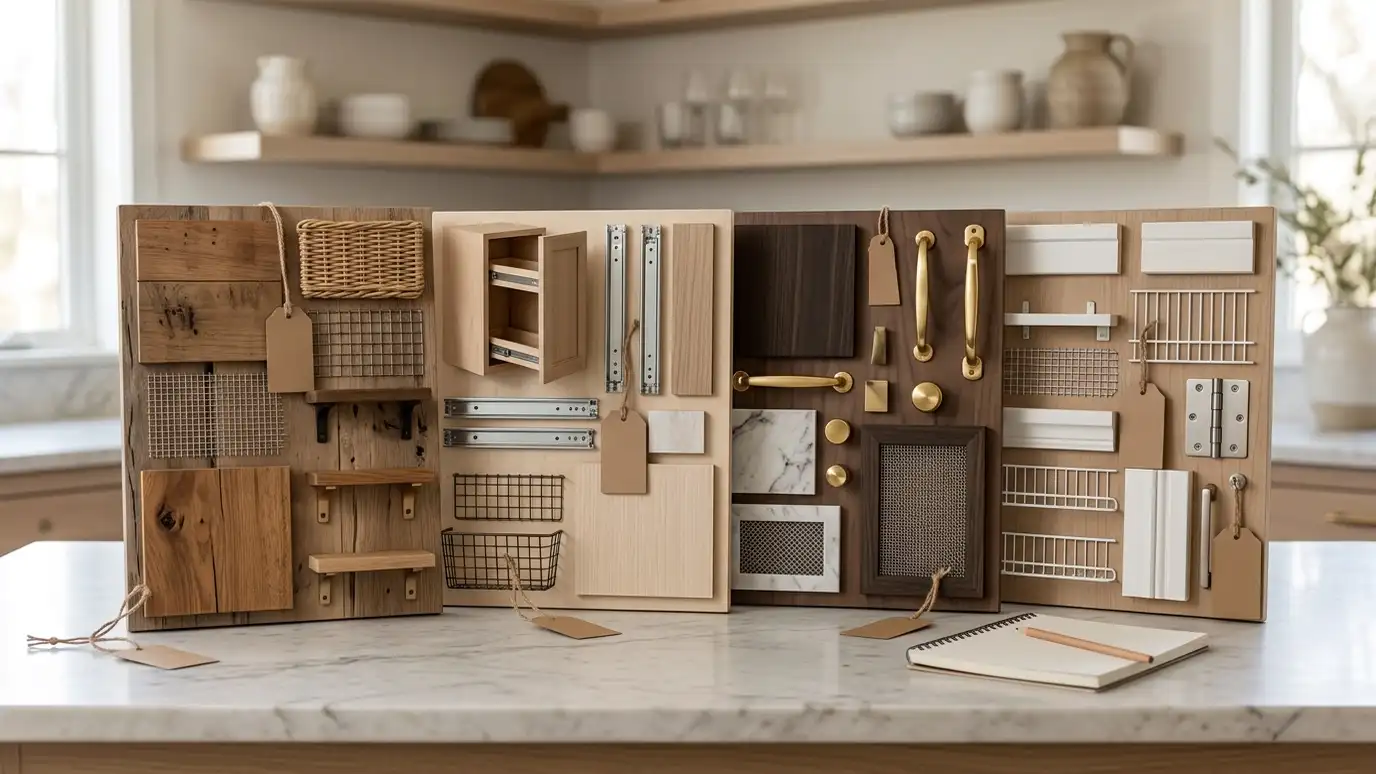
If the pantry keeps failing, the problem may be the shelves, and an upgrade can help.
Choose a day each month for a five-minute check of dates and stock. Tie it to something you already do, such as writing the shopping list, so it becomes automatic instead of one more task.
Empty it, sort it, zone it, label it and give it five minutes of care each week.